The hand of Self Care
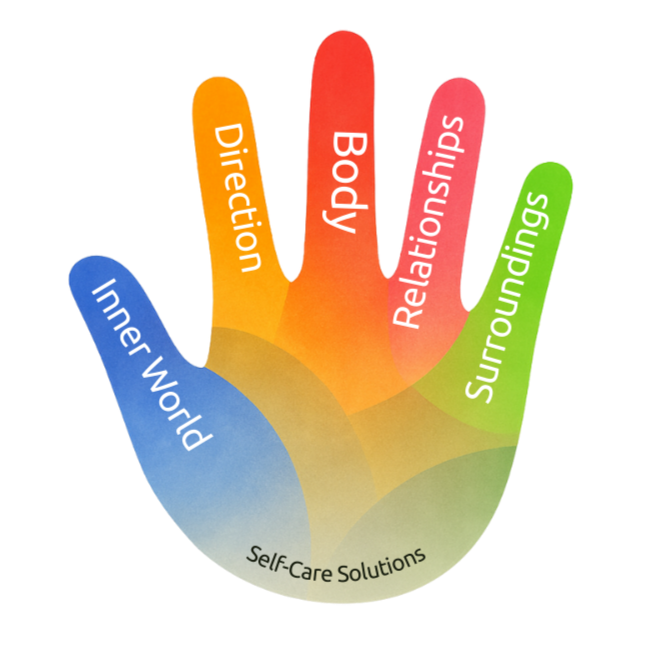
Life is usually experienced as one whole.
The hand acknowledges that wholeness,
It does this by grouping and naming the main ways people tend to experience life.
People do this informally all the time, often without naming it.
That’s all the hand is.
It isn’t a framework for improvement, a guide for change, or a way of working on yourself.
It doesn’t explain why things happen or suggest what should be done.
It simply separates and names what is often felt all at once.
-
What the hand represents
The hand doesn’t divide life because life is actually separate.
It divides it because seeing is easier when things aren’t tangled together.
Each aspect contains its own influences. These influences don’t stay contained within one area. They interact with the whole of life, and with each other, all the time.
The hand allows these interactions to be noticed without needing to map, manage, or resolve them.
An aspect drawing attention isn’t necessarily a problem.
It simply reflects where life is most present at that moment.
What draws attention in one period of life may recede in another.
-
There is no correct order and nothing to complete.
The hand isn’t something to work through or apply.
It’s a way of looking.
Experiences often touch more than one aspect at the same time. The hand is not a filing system, and there is no “right place” to put things.
Seeing doesn’t require response.
Sometimes noticing is enough.
The hand isn’t meant to capture everything, only enough to make experience easier to see.
For example, when anxiety is present in the inner world, it is often shaped by influences beyond the inner world itself.
When experience is seen through multiple aspects, direction, relationships, the body, or surroundings may come into view as part of what is shaping the experience, even when they weren’t previously noticed.
The five aspects
Each finger represents one aspect of how life is commonly experienced. None of them exist in isolation, and none are more important than the others.
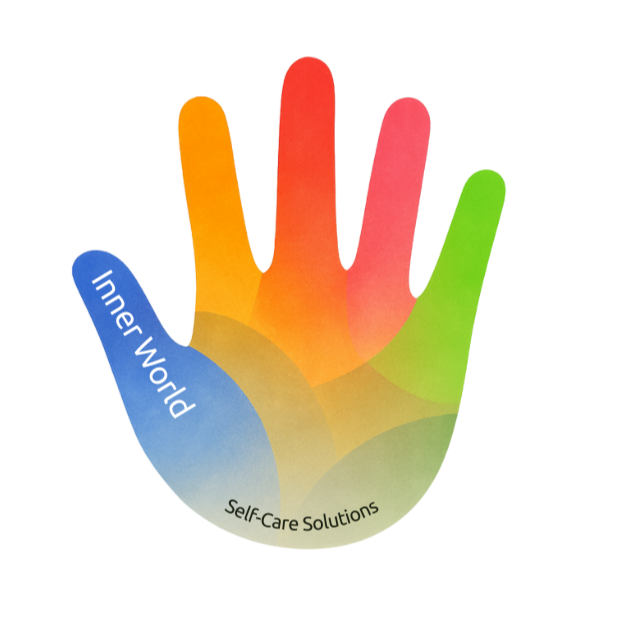
Inner world
This refers to internal experience, such as thoughts, emotions, memories, values, and meaning.
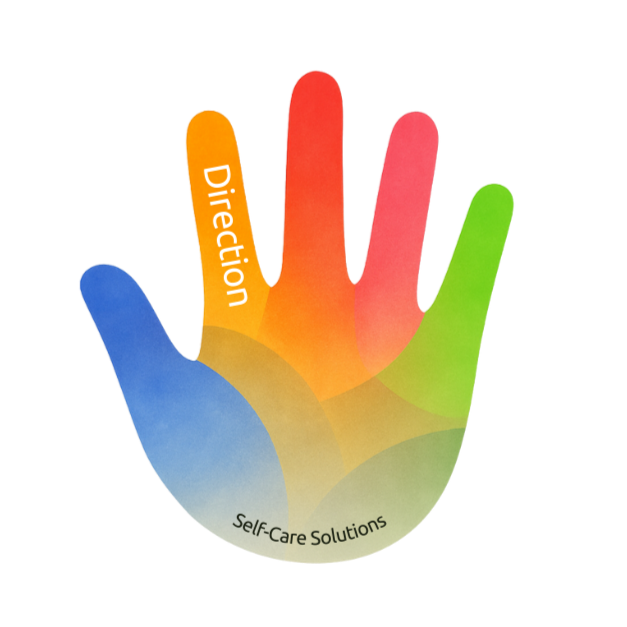
Direction
This refers to orientation in life, including priorities, roles, commitments, and where attention is being directed over time.
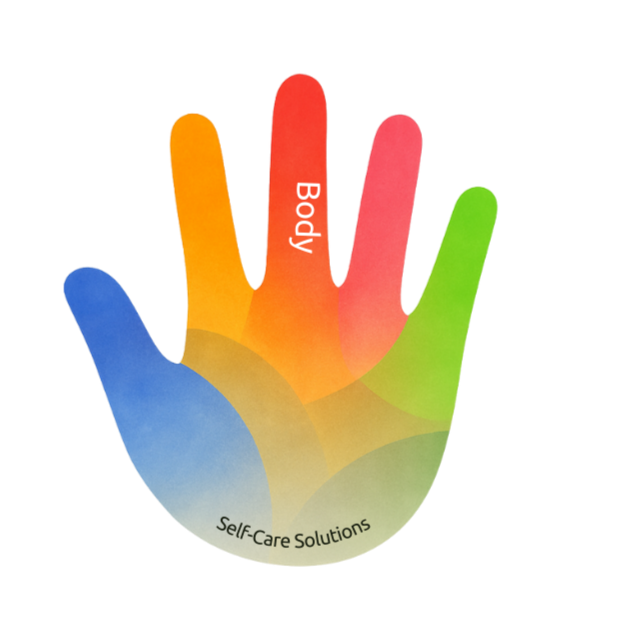
Body
This refers to physical experience, including energy, movement, rest, and how the body responds to daily demands.
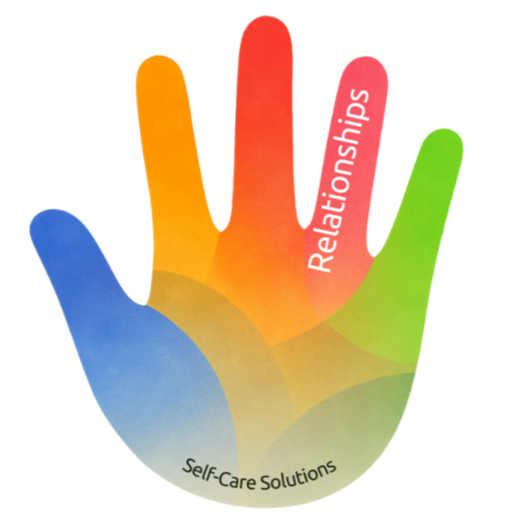
Relationships
This refers to connection with others, including roles, boundaries, expectations, and patterns of interaction.
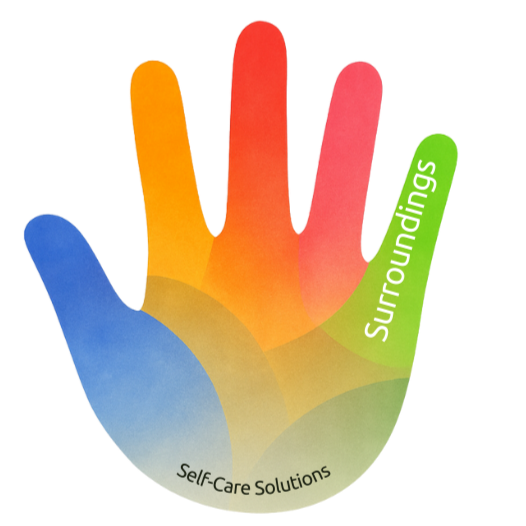
Surroundings
This refers to the environments a person moves through, including home, work, routines, and physical spaces